On a wine label we usually look for the producer, the grape and the vintage. But one detail matters just as much and is easy to miss: where the wine comes from. The same grape tastes different grown on the limestone of Pálava, on the slate of the Mosel or on the sunny slopes of Piedmont. Join us on a tour of the wine regions we pour from at TURET.
Why origin matters
The French call it terroir: the interplay of climate, soil, the vineyard's position and local tradition. Roughly speaking:
- cooler regions give fresher wines with higher acidity and lower alcohol,
- warmer regions give fuller wines with riper fruit,
- soil shapes how the wine feels in your mouth. Limestone and slate are often linked with a mineral, "salty" impression, loess with softer, fruitier wines.
Moravia: four sub-regions
The Czech Republic has two wine regions, Bohemia and Moravia. The vast majority of Czech vineyards are in Moravia, which is divided into four sub-regions: Znojmo, Mikulov, Velké Pavlovice and Slovácko.
Mikulov: the limestone of Pálava
The vineyards around the Pálava hills, in Perná, Bavory, Mikulov, Dolní Dunajovice and Březí, grow on limestone-rich soils. Wines from here tend to be mineral, with firm acidity and good ageing potential. Welschriesling, Riesling and the local Pálava grape do particularly well. Local winemakers also have their own appellation of origin, VOC Mikulov.
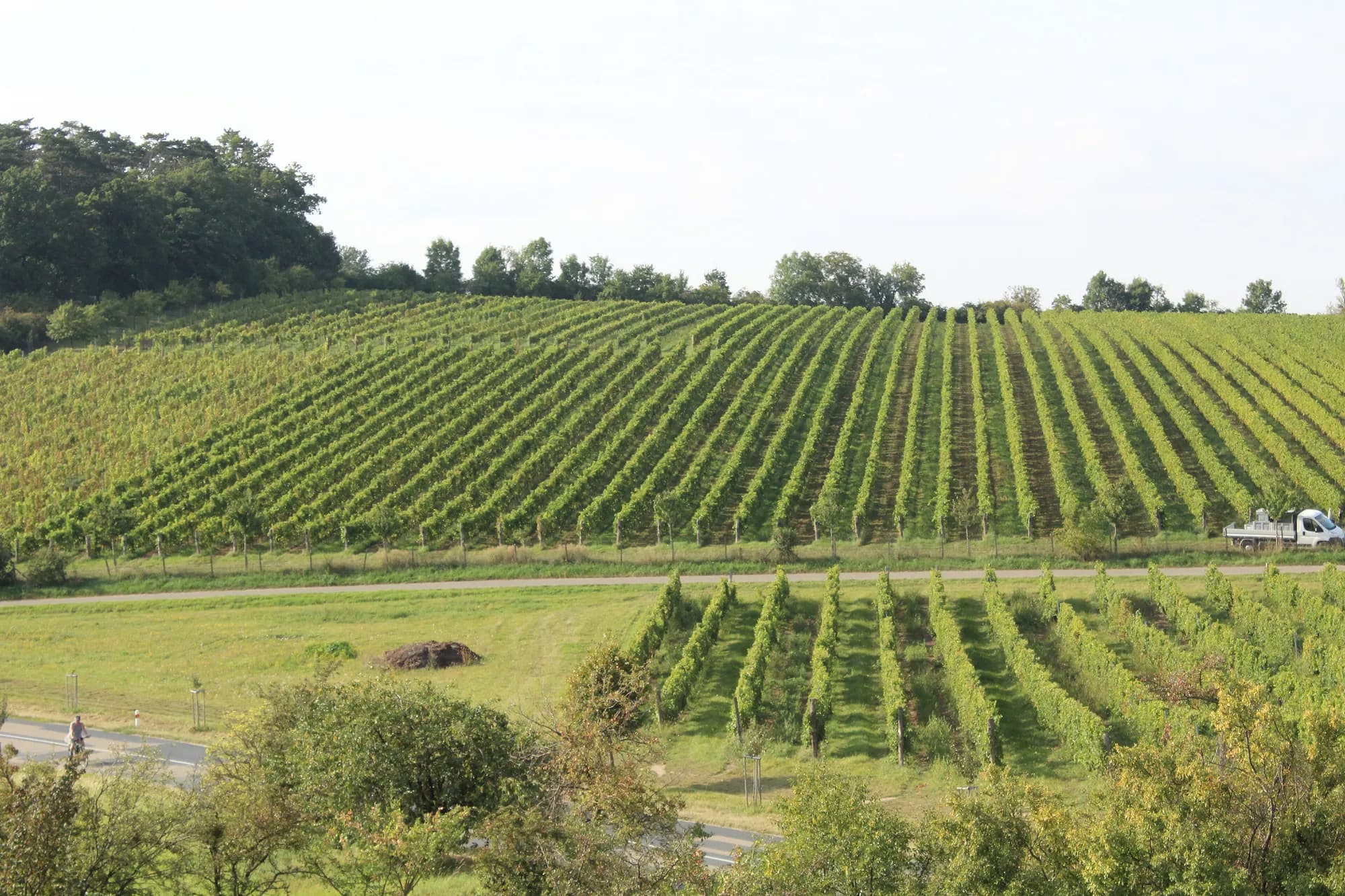
From here we pour wines by Volařík from Perná and by Entrée from Bavory, Mikulov and Březí.
Velké Pavlovice: loess and red wines
Around Velké Pavlovice, Kobylí and Němčičky, loess soils and warm slopes dominate. The sub-region is best known for its red wines, but whites do well here too. This is home to the family winery Filiberk from Kobylí.
Znojmo and Slovácko
Znojmo in the west is cooler, with granite and sandy soils, and is famous for fresh, aromatic whites, especially Sauvignon and Grüner Veltliner. Slovácko in the east is the most varied sub-region, full of small growers and traditional wine cellars.
Austria: Veltliner next door
Austrian vineyards start right across Moravia's southern border, and the climate and grapes are similar. Austria's signature grape is Grüner Veltliner, called Veltlínské zelené in Czech.
- Weinviertel: Austria's largest wine region, directly bordering southern Moravia. Wine by Pfaffl.
- Wagram: named after the loess escarpment above the Danube. Wine by Söllner.
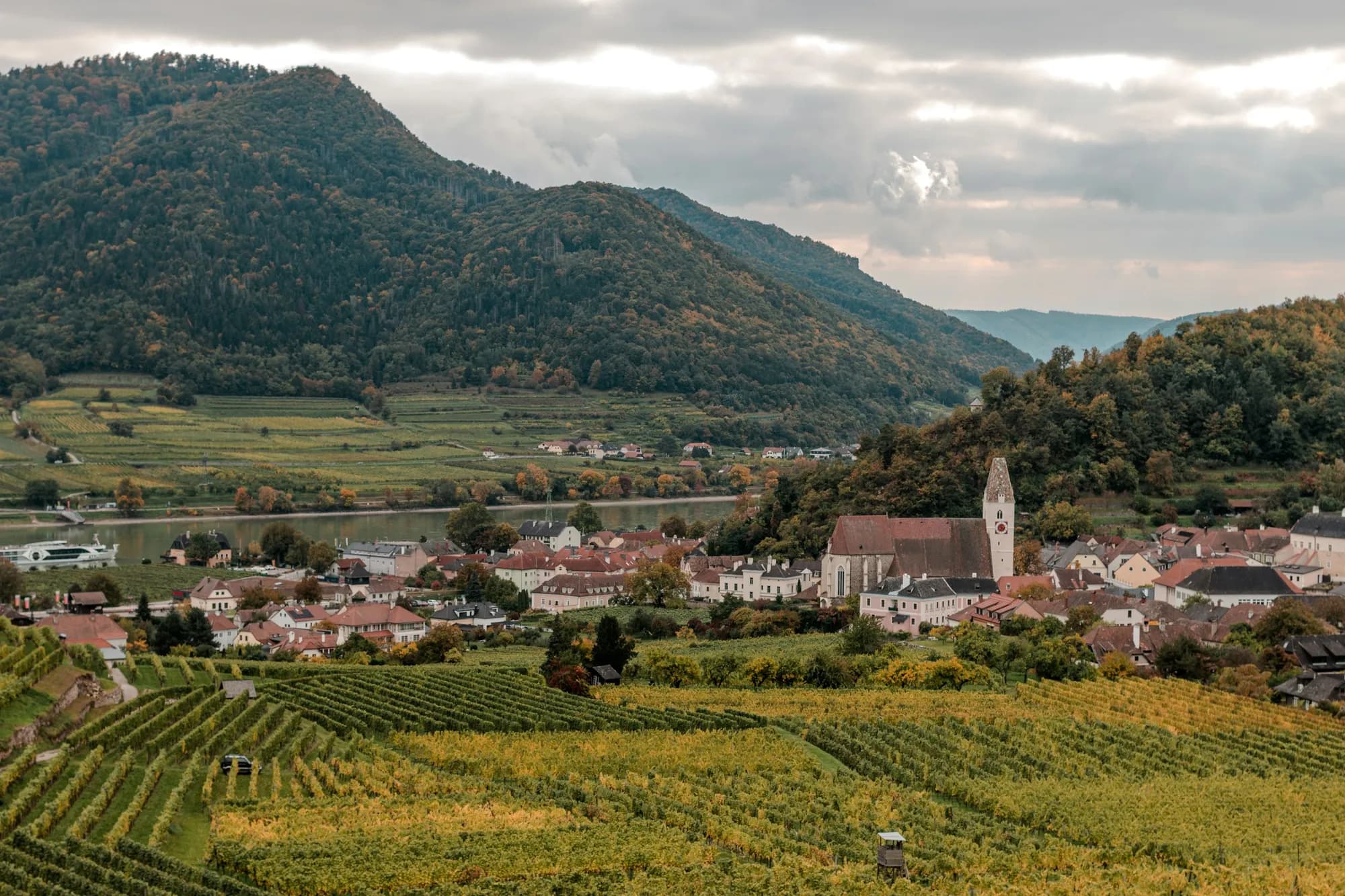
- Wachau: a narrow stretch of the Danube valley with steep stone terraces, a UNESCO World Heritage site. Wine by Gattinger.
- Neusiedlersee: a warm region by Lake Neusiedl in Burgenland, known for its red wines. We pour Blaufränkisch by Gernot Heinrich.
Germany: the kingdom of Riesling
German vineyards are among the most northerly in the world. Riesling gives wines with high acidity here that can age for decades.
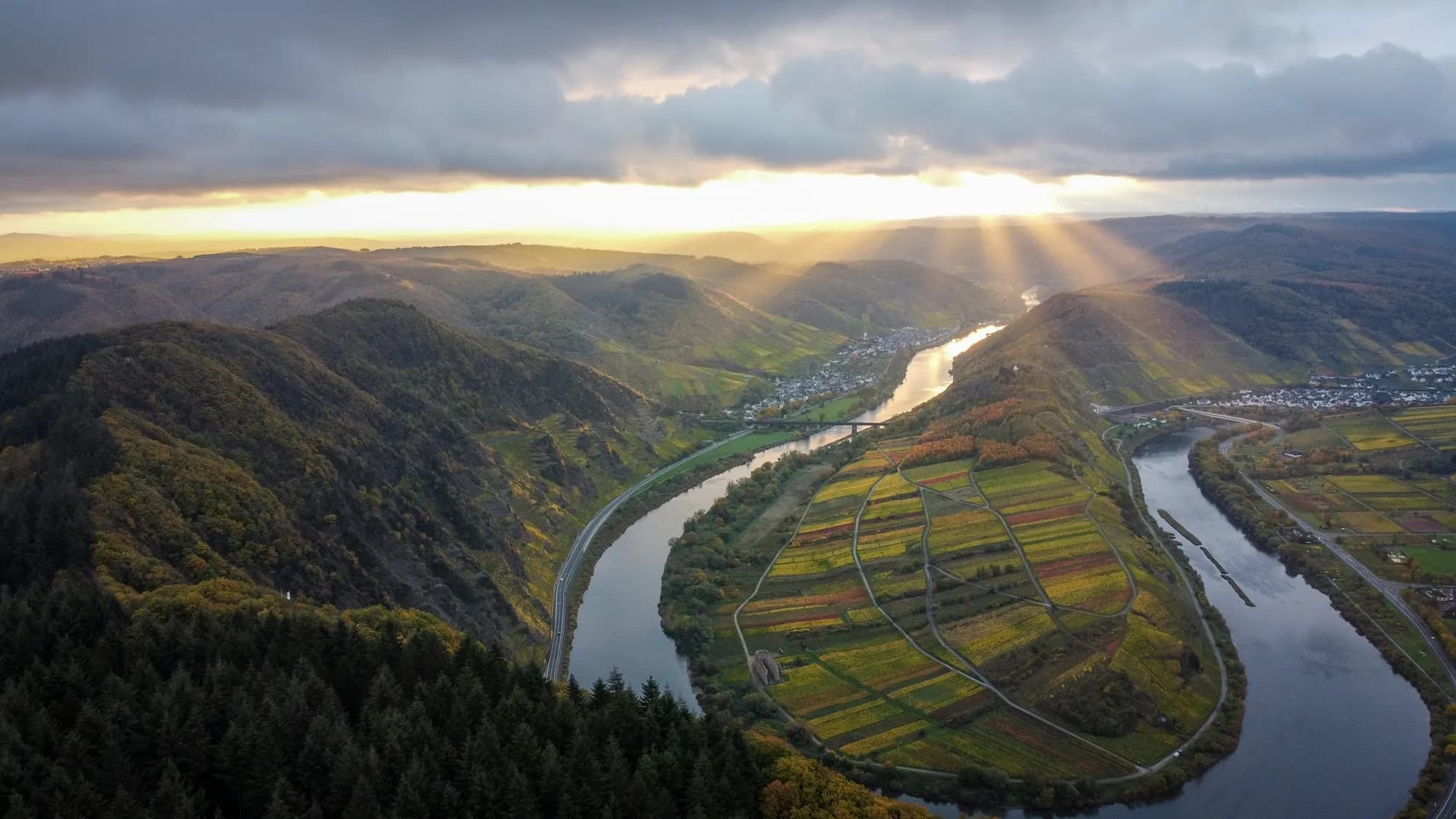
- Mosel: vineyards on extremely steep slate slopes above the river. That is why the wine by Deutschherrenhof is called Schiefer, German for slate.
- Ruwer: a small tributary of the Mosel, home of the Maximin Grünhaus estate.
- Rheingau: south-facing slopes above the Rhine, historically one of the most famous Riesling regions. Wine by Künstler.
- Rheinhessen: Germany's largest wine region. Wine by Riffel.
Italy: every region a different world
Wine is made in practically every Italian region, and each has its own grapes. From our list:
- Veneto: the hills of Conegliano and Valdobbiadene are home to Prosecco Superiore DOCG and have been a UNESCO World Heritage site since 2019. We pour Zucchetto.
- Friuli-Venezia Giulia: the north-east on the Slovenian border, famous for white wines. Pinot Grigio and Friulano by Komjanc.
- Piedmont: the foothills of the Alps, home of Nebbiolo, the grape behind Barolo, and Barbera. By Fratelli Ferrero, including a Barolo.
- Emilia-Romagna: home of Lusenti, with their sparkling Barbera and the orange Rorippa.
- Abruzzo and Puglia: the warm centre and south, rich reds from Montepulciano and Primitivo.
France: the regions the world measures itself by
- Champagne: France's most northerly major region and home of the most famous bubbles.
- Burgundy: small vineyards divided into precisely defined plots, and two main grapes: Pinot Noir for reds and Chardonnay for whites. We pour Olivier Leflaive and Vaudoisey-Creusefond from the village of Auxey-Duresses.
- Bordeaux: one of the largest and most famous regions in the world, divided by the Garonne and Dordogne rivers. On the Left Bank (Médoc, Haut-Médoc, Saint-Julien, Pauillac, Saint-Estèphe) the blend is usually led by Cabernet Sauvignon, on the Right Bank (Saint-Émilion, Pomerol) by Merlot. We have more than ten wines from both banks.
- Languedoc: the sunny south on the Mediterranean. Our Crémant by Maison Salasar comes from the small town of Limoux.
Further afield
- Spain: Rioja, where wine is traditionally aged in oak. Crianza and Reserva on the label tell you for how long. From inland Aragón, a Garnacha from Calatayud.
- Greece: Amyndeon in the north, one of the coolest Greek regions, and the island of Crete.
- Bulgaria: the Thracian Lowland, a warm region of full-bodied reds.
- Chile: San Antonio Valley, cooled by the nearby Pacific, and Maipo Valley near Santiago.
- Argentina: Uco Valley, vineyards high up in the Andes.
- Australia: the Barossa Valley, home of rich Shiraz.
- Portugal: the Douro valley, home of port.
Taste the difference
You learn the most by ordering the same grape from different regions. We pour 0.1 l glasses, so you can do it in a single evening.
Veltliner from three regions: Kobylí in Moravia, Austria's Weinviertel and the Wachau.
Riesling from four places: Moravia, two German regions and Chile.
How wine reached all these places is the subject of our Short history of wine. And if you would like to travel the regions with a sommelier, join one of our tastings:
The next tasting will be announced soon.
Photo of the Pálava vineyards: Jan Sapák, Wikimedia Commons, licensed under CC BY-SA 4.0, resized.