Wine is older than writing. It has been with us for at least eight thousand years, shaping religion, trade and landscapes, and its story leads all the way here, to Prague's Vinohrady. Join us for eight stops that turned fermented grape juice into one of the world's most fascinating drinks.
The Caucasus: where it began
The oldest known traces of wine come from the South Caucasus. Archaeologists in Georgia found wine residue in pottery jars around 8,000 years old. In neighbouring Armenia, the Areni cave holds the oldest known winery, with a press and fermentation vessels, more than 6,000 years old.
In Georgia, wine is still made in qvevri, large clay vessels buried in the ground; the method has been on UNESCO's list of intangible cultural heritage since 2013. White grapes ferment in qvevri together with their skins, which gives the wine an amber colour and gentle tannins. Today's orange wines follow this tradition.
Egypt, Greece and Rome
In ancient Egypt, wine was a drink of the elite and the gods. Jars in Tutankhamun's tomb were marked with the vintage, the vineyard and the winemaker: essentially the first wine labels.
The Greeks made wine part of their culture. They worshipped Dionysus, drank wine mixed with water at gatherings called symposia, and spread the vine across the Mediterranean with their colonies, including Sicily, southern Italy and today's Marseille.
The Romans then turned winemaking into trade on a European scale. They brought the vine to Gaul, today's France, and to the Rhine, the Mosel and the Danube. A Roman tombstone showing a ship loaded with wine barrels was found on the Mosel; it is known today as the Neumagen wine ship.
Wine in Moravia
An often-quoted tradition says the Romans already grew vines below the Pálava hills. Roman legions really were stationed nearby, at Mušov, in the 2nd century, but there is no direct evidence of their vineyards. Reliable finds date from Great Moravia in the 9th century: archaeologists at Mikulčice and Staré Město discovered vine knives and grape seeds.
The Middle Ages: monks and a king
After the fall of Rome, vineyards were looked after mainly by monks. They needed wine for Mass and had the time and patience to perfect it. Cistercian monks in Burgundy noticed that different parts of a vineyard gave different wine and walled them off. This is how Burgundy's precisely defined vineyard plots, the climats, came about; they have been a UNESCO World Heritage site since 2015.
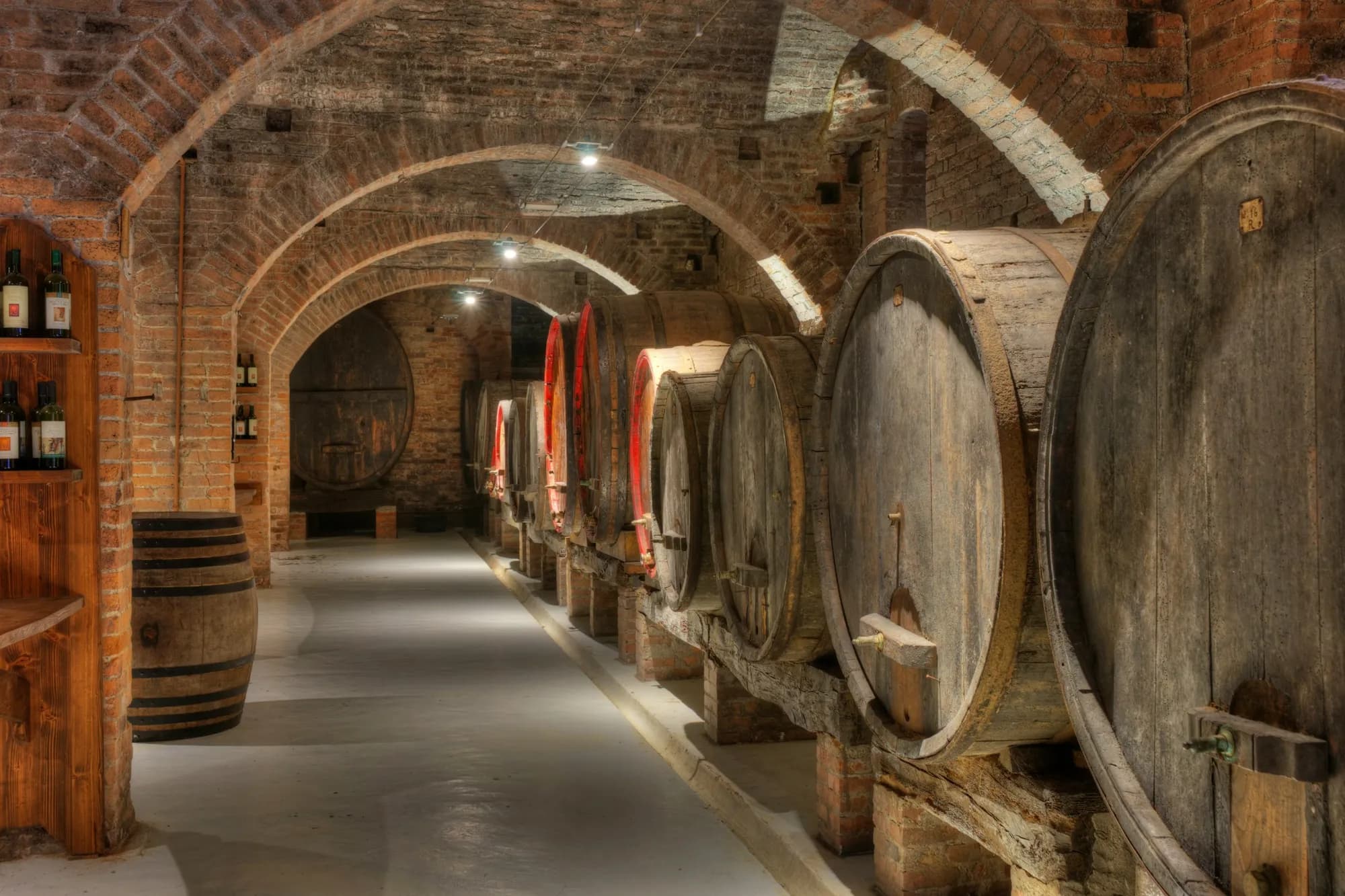
In Bohemia, wine's greatest patron was Charles IV. In 1358 he ordered vineyards to be planted around Prague. Royal vineyards soon covered the slopes beyond the walls of the New Town, and they gave the district of Vinohrady its name, meaning "vineyards" (formerly Royal Vineyards). A restored vineyard in Havlíček Gardens, known as Grébovka, just a short walk from us, still recalls them.
Bottle, cork and bubbles
In the 17th century, the English began producing stronger glass. A sturdy bottle with a stopper let wine age for years and also kept the carbon dioxide inside. Legend credits the monk Dom Pérignon with inventing champagne. In reality he rather tried to avoid bubbles and made his name as a master at blending wines from different vineyards.
1855: a classification still in force
For the 1855 World Exhibition in Paris, Bordeaux merchants ranked the best châteaux by the prices of their wines. They divided them into five classes, the crus classés, and with just one major change the ranking still stands. From our list it includes, for example, Château Beychevelle (4th growth), Château Grand-Puy-Lacoste and Château Cantemerle (both 5th growth). Les Pagodes de Cos is the second wine of Château Cos d'Estournel, one of the second growths.
Phylloxera: the disaster that changed vineyards
In the 1860s a tiny aphid called phylloxera arrived in France from America. It attacks vine roots and within a few decades destroyed most of Europe's vineyards, including Moravia's towards the end of the century. They were saved only by grafting European vines onto resistant American rootstocks, so most European vines still grow on foreign roots today.
Phylloxera never reached Chile, where vines grow on their own roots.
Moravian wine today
In the 20th century, Moravian breeders created their own grape varieties, such as Pálava and Cabernet Moravia. After 1948 the vineyards were nationalised and the focus was on quantity. After 1989 family winemakers returned to the vineyards, the VOC appellation of origin was introduced, and the quality of Moravian wine has been rising fast ever since.
Wines from smaller producers in Moravia and around the world are exactly what we pour at TURET. Come and taste where eight thousand years have taken wine:
The next tasting will be announced soon.