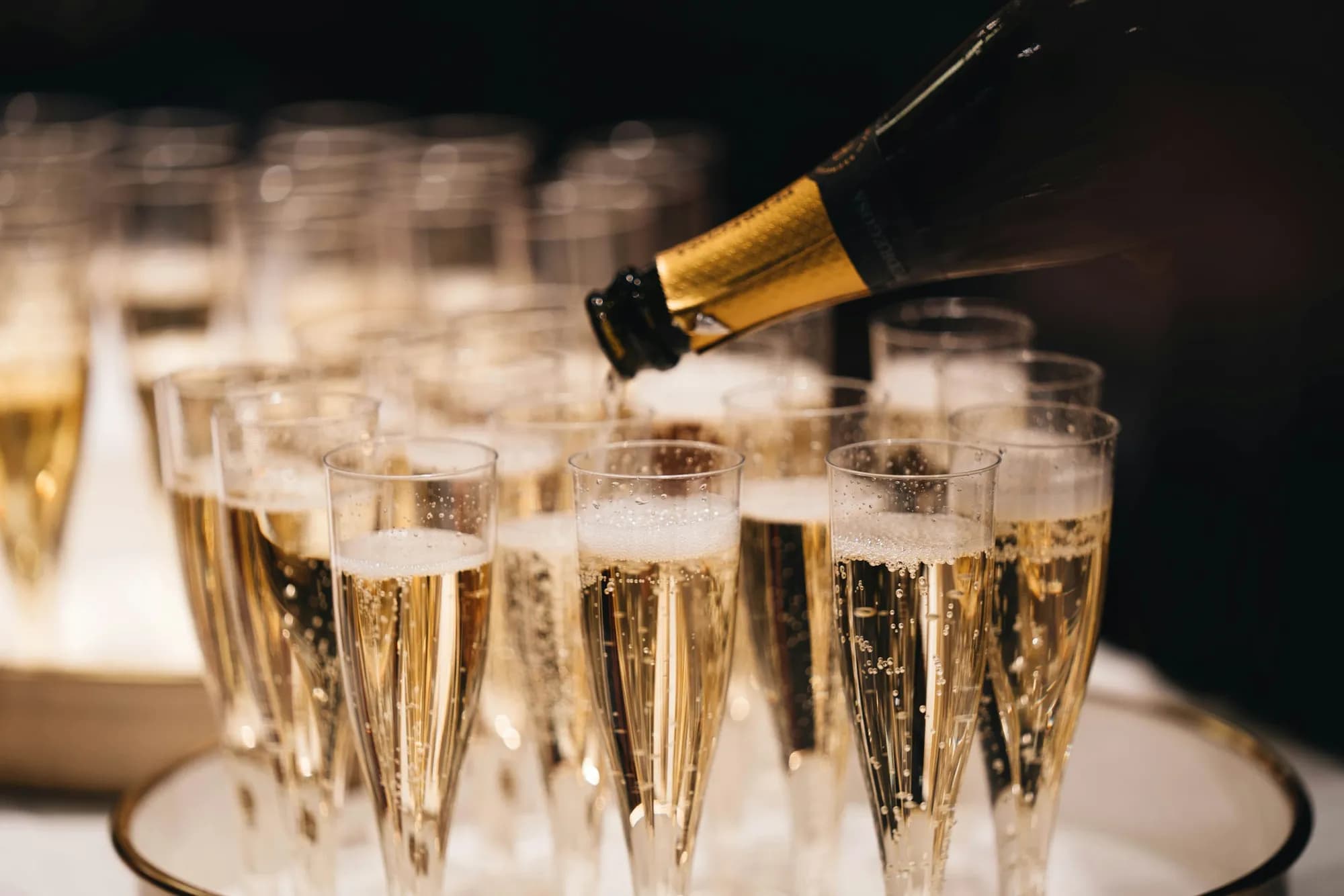
All sparkling wines have one thing in common: the bubbles come from fermentation, when yeast turns sugar into alcohol and carbon dioxide. The difference lies in where the second fermentation happens and how long the wine ages afterwards. That is what makes champagne, crémant and prosecco three completely different wines.
The traditional method: second fermentation in the bottle
This is how champagne and crémant are made. The process has six steps:
- The grapes are made into a still base wine, often blended from several vineyards and vintages.
- The wine is bottled with a little sugar and yeast, and the bottle is sealed.
- The wine ferments a second time in the bottle. The carbon dioxide has nowhere to go, so it dissolves into the wine.
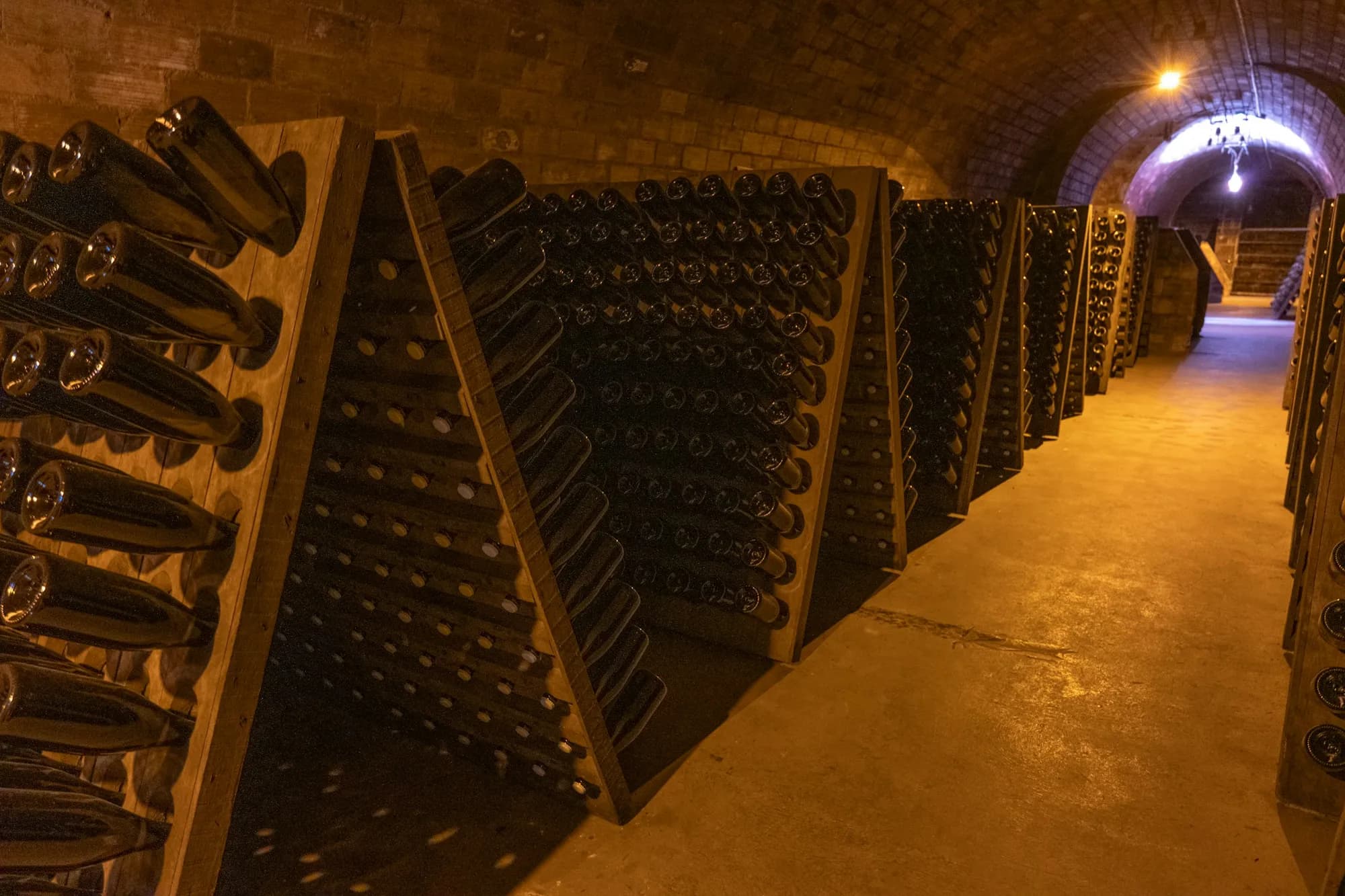
- The wine ages on the dead yeast cells, the lees, gaining notes of brioche, biscuits and pastry and a fine, lasting mousse.
- The bottles are gradually turned neck-down, the lees slide to the cork and are removed. This step is called disgorging.
- The bottle is topped up with the dosage, wine with a little sugar that sets the final sweetness, and sealed with a cork and wire cage.
Champagne
Champagne may only be made in the region of the same name in north-eastern France, mainly from Chardonnay, Pinot Noir and Pinot Meunier. It must age in the bottle for at least 15 months, at least 12 of them on the lees, and vintage champagne for at least three years. Long ageing and manual work are the main reasons for the higher price.
- Blanc de Blancs means "white from whites": made only from white grapes, usually Chardonnay.
- Rosé champagne is often made by blending white and red wine, an exception among European rosés.
Crémant
Crémant is French sparkling wine made by the same traditional method, but outside Champagne: in Burgundy, Alsace, the Loire or Limoux. It must age on its lees for at least 9 months. It often offers an experience very close to champagne at a fraction of the price.
Limoux in the south of France also claims the world's oldest sparkling wine: according to local tradition, monks at the abbey of Saint-Hilaire were making it sparkle as early as 1531, long before Champagne became famous.
The tank method: second fermentation in a tank
This is how most prosecco is made. The second fermentation does not happen in each bottle separately but in a large pressurised tank. The wine is then filtered and bottled under pressure. It is quicker and cheaper, but above all it keeps the wine fresh and fruity. A typical prosecco smells of green apple, pear and white flowers.
Prosecco comes from north-eastern Italy and is made from the Glera grape. The top level is Conegliano Valdobbiadene Prosecco Superiore DOCG from steep hills that have been a UNESCO World Heritage site since 2019.
How to read sweetness on the label
With sparkling wine, sweetness depends mainly on the dosage. Watch out, the names are misleading: extra dry is sweeter than brut. The sugar limits are set by EU rules:
- Brut nature: less than 3 g/l, no added sugar
- Extra brut: up to 6 g/l
- Brut: up to 12 g/l, the most common style
- Extra dry: 12–17 g/l
- Sec: 17–32 g/l
- Demi-sec: 32–50 g/l
- Doux: over 50 g/l
How to serve bubbles
- Temperature: 6–8 °C, a degree or two warmer for mature and vintage champagne. Too cold and the wine loses its aroma, too warm and it quickly loses its bubbles.
- Glass: a narrow flute keeps the bubbles, but you will smell more in a tulip glass or a white wine glass.
- Opening: hold the cork, turn the bottle and let the gas out slowly. A properly opened bottle just gives a quiet "sigh".
- Large bottles: in a magnum (1.5 l) the wine ages more slowly and evenly. We have Gruet's Brut Sélection in magnum and in a three-litre jeroboam.
Taste them side by side
The best way to tell the difference is to order two glasses side by side: prosecco and crémant. Start with the prosecco and notice how the crémant brings more pastry notes and a finer mousse. We serve champagne by the bottle, which makes it ideal when you are celebrating with friends. Bubbles love salty food: smoked almonds, olives, salted crisps or a prosciutto panini.
For a bigger celebration, we recommend the rosé champagne by Legras & Haas.
Why stronger glass made champagne possible is explained in our Short history of wine.