A good pairing can turn an ordinary glass and a simple plate into an experience. The wine lifts the flavour of the food, the food softens the wine, and the result is better than either on its own. You don't need charts or complicated rules. Seven principles that most sommeliers agree on, and a willingness to experiment, are enough.
1. Light with light, rich with rich
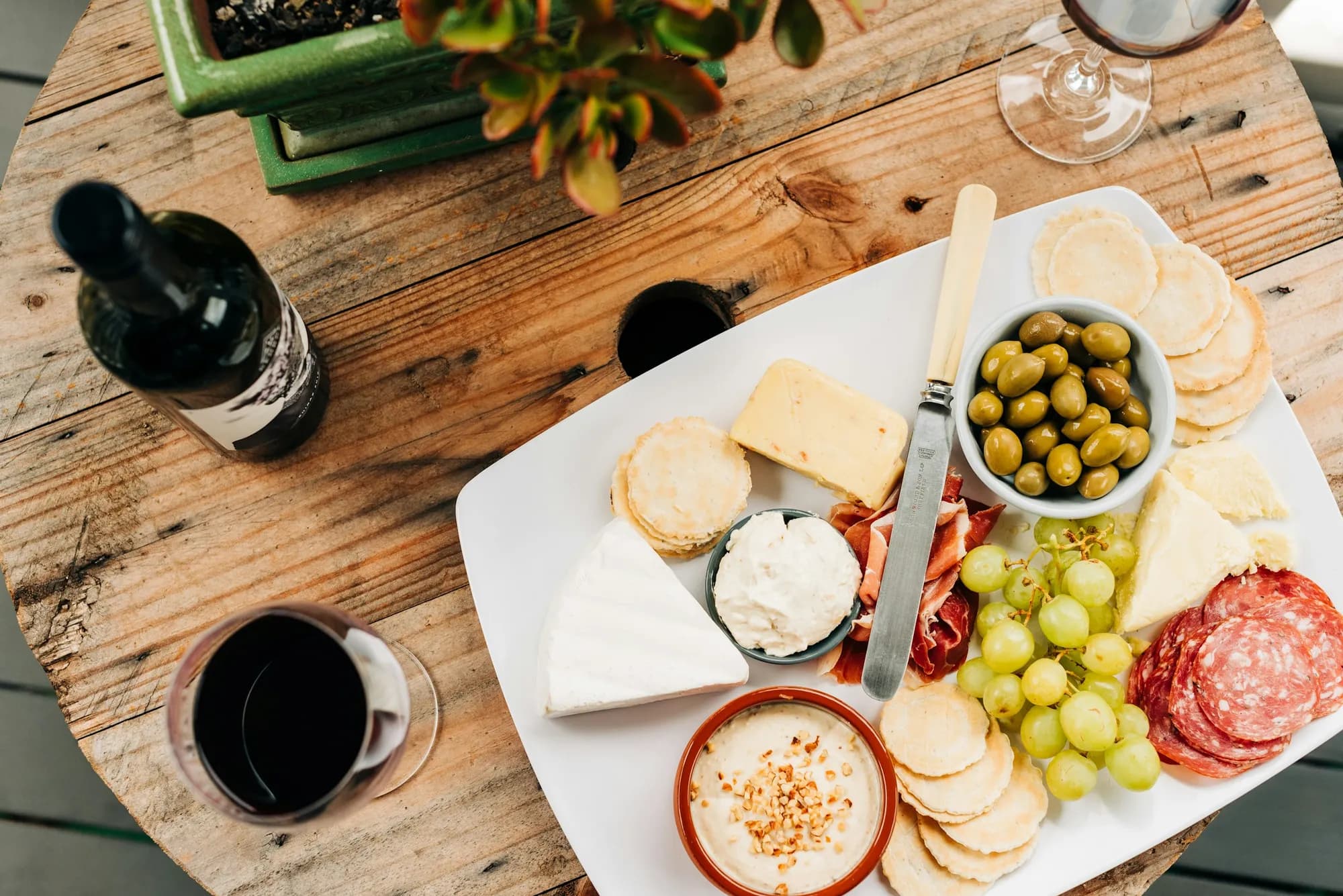
The most important rule is balance. A delicate dish gets steamrolled by a powerful red, while a light white disappears next to hearty charcuterie. So a light Grüner Veltliner suits hummus or a panini, a full Pinot Blanc goes with mature cheese, and tannic reds go with salami.
2. Acidity loves fat and salt
A wine's fresh acidity works like a squeeze of lemon: it refreshes your palate and cuts through richness. That is why Riesling or Grüner Veltliner work so well with cheese, pâté and fried food. It also works the other way round: the wine should have at least as much acidity as the food, otherwise it tastes flat.
3. Bubbles and salty food
Sparkling wine is one of the most versatile food partners. Bubbles and acidity cleanse the palate, while salt brings out the fruit in the wine. Order prosecco or crémant with olives, smoked almonds, crisps or a prosciutto panini. It is not just an aperitif, it is a wine for the whole evening.
4. Tannin needs protein and fat
The tannins in red wine, that drying grip you know from strong tea, soften when they meet protein and fat. That is why red wine works so well with salami, ham or aged cheese. With fish, on the other hand, tannins can taste metallic, and with spicy food they make the heat stronger.
5. The wine should be sweeter than the dessert
With dessert, choose a wine that is sweeter than the dessert itself. Otherwise the wine will taste sour and bitter next to it. Sweet wines are not only for dessert, though. Gentle sweetness balances salty and creamy food beautifully, such as pâté. The classic example is the French pairing of foie gras with sweet Sauternes.
6. What grows together goes together
Food and wine from the same region have grown up together for centuries and often match naturally. An Italian Barbera with Italian prosciutto, a Greek wine with Greek olives, a Moravian Riesling with pickled Hermelín cheese. When in doubt, pick a wine from the same country as the food.
7. Like attracts like, or opposites attract
You can pair by similarity: an aromatic wine with aromatic food, a creamy wine with a creamy sauce, an earthy Pinot Noir with mushrooms. Or by contrast: a fresh, crisp wine with rich food, a sweet wine with salty cheese. Both work; just never let one side completely overpower the other.
What to order at TURET
Our kitchen is cold and simple, which makes it all the easier to pair. Here are our tips:
French cheese selection. The full Pinot Blanc from Filiberk, with notes of hazelnut and butter. If you prefer red, try the Burgundy Pinot Noir.
Charcuterie selection. A juicy Barbera d'Alba, a Rioja Crianza or the Blaufränkisch from Gernot Heinrich. All three have enough acidity and gentle tannins.
Pickled Hermelín cheese and utopenec (pickled sausage). The fresh, slightly salty Grüner Veltliner from Filiberk. A Czech classic with Moravian wine.
French pâté. The off-dry Riesling from Maximin Grünhaus. Its gentle sweetness and high acidity suit pâté the way sweet wine suits foie gras.
Hummus with olive tapenade and Greek olives. The Greek Malagouzia from Alpha Estate. What grows together goes together.
Goat's cheese panini with figs and honey. A dry, crisp Riesling, for example from Entrée below the Pálava hills. Goat's cheese and Riesling are one of the most reliable pairings of all.
Panna cotta with raspberries. A sweet straw wine or port. Rule number five: the wine sweeter than the dessert.
None of these tips is set in stone. You will learn the most by ordering two different glasses with the same plate and comparing them. And if you are unsure, just ask us. Pairing is the part of our job we enjoy most.
The basics of tasting are covered in the first lesson of our Wine School.